 Reviews



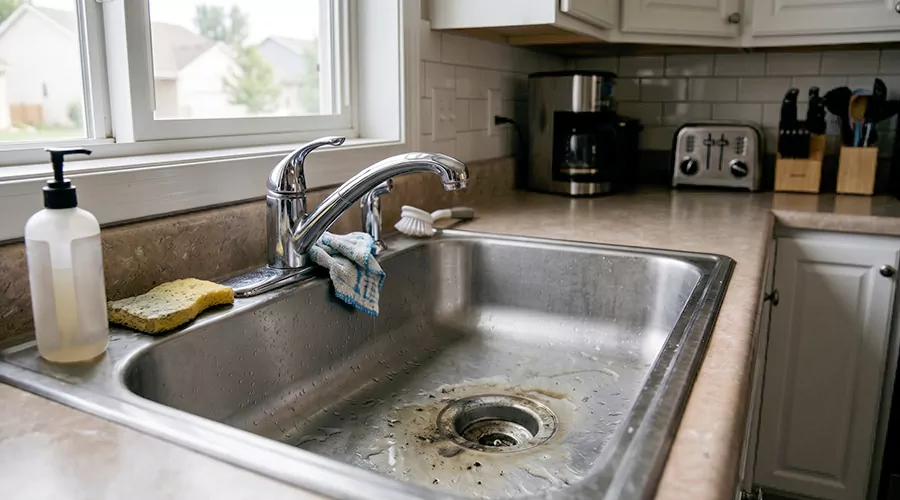
A drain usually smells because organic residue has accumulated inside it or the water seal in its P-trap has been lost. Food buildup, hair, and bacterial deposits can produce unpleasant odors. A dry or damaged trap may allow sewer gases into the room. Drain cleaning can help remove buildup, restore proper drainage, and address odor-causing debris within the drain system.
The type of odor and the fixtures affected provide useful clues.
A stinky drain that smells musty may need physical cleaning. A persistent sewage odor, particularly when several fixtures are affected, may require investigation of the drainage system.
What Causes Unpleasant Drain Odors?
Unpleasant drain odors have several possible causes. Some originate from material collecting near the drain opening. Others occur when the plumbing system no longer prevents sewer gases from entering occupied areas.
Common causes include:
- Organic buildup: Food particles and other waste can decompose inside drainage piping.
- Biofilm: Bacterial deposits can develop on damp drain surfaces.
- Hair and soap residue: Bathroom drains can retain organic material for extended periods.
- Dry P-traps: Evaporation can remove the water barrier that normally blocks sewer gases.
- Blocked drains: Partial obstructions can retain decomposing material.
- Damaged plumbing: Defective connections may allow odors to escape.
- Venting problems: Pressure changes can sometimes disturb trap water seals.
In January 2026, South Davis Sewer District identified dry or missing P-traps as a common cause of sewer odors in residential and commercial buildings.
What Does the Type of Drain Smell Tell You?
The odor can help narrow the possible causes, although smell alone cannot establish a diagnosis.
| Odor | Possible Cause | Initial Investigation |
|---|---|---|
| Sour food smell | Decomposing organic material | Inspect kitchen drainage |
| Musty smell | Damp residue or biofilm | Clean accessible surfaces |
| Sewage smell | Missing water seal or drainage defect | Check the P-trap |
| Rotten-egg odor | Sewer gases or decomposing material | Identify affected fixtures |
| Persistent odor with slow drainage | Partial blockage | Investigate the restriction |
A rotten-egg smell should not automatically be attributed to a household drain. If the source is uncertain, particularly near gas appliances, avoid attempting an improvised diagnosis.
Why Does My Drain Smell Like Sewage?
A sewage smell can occur when the P-trap no longer maintains the water barrier between the room and the drainage system.
The P-trap is the curved section of piping beneath many sinks and other fixtures. It is designed to retain enough water to block the normal movement of sewer gases.
When that water evaporates or is lost, gases can enter through the drain.
This problem commonly affects:
- Guest bathrooms that receive little use.
- Basement floor drains.
- Garage drainage openings.
- Utility sinks.
- Showers in vacant properties.
Sewer odor can also result from other plumbing defects. Restoring the water seal is a useful first check, but persistent odors require further investigation.
Can a Dry P-Trap Cause Drain Odors?
Yes. An unused drain can lose its water seal through evaporation.
The simplest way to investigate this possibility is to refill the trap and observe the result.
- Identify the drain producing the odor.
- Check whether the fixture has been unused for an extended period.
- Run clean water into the drain for approximately one minute.
- Allow the room to ventilate.
- Observe whether the smell disappears.
- Check again over the following days.
If the odor disappears and remains absent, evaporation is a plausible explanation.
If it returns rapidly, another condition may be affecting the trap seal.
South Davis Sewer District recommends running water in infrequently used drains at least monthly to help maintain their water seals.
What Is Biofilm and Why Does It Smell?
Biofilm is a layer of microorganisms and accumulated material that can develop on wet surfaces. Drainpipes provide a suitable environment because water and organic residue regularly pass through them.
A dirty drain can support bacterial growth even when water still flows normally.
The resulting odor is often most noticeable near the opening.
Common locations include:
- Bathroom sink stoppers.
- Shower drain covers.
- Upper drainage pipes.
- Garbage disposal splash guards.
- Accessible drain components containing organic residue.
Physical cleaning removes the material supporting much of this buildup.
A fragrance product may temporarily conceal the smell without removing its source.
Why Does My Drain Smell Even Though It Is Not Clogged?
A drain does not need to be blocked to produce an unpleasant odor.
Biofilm can develop on internal surfaces without substantially restricting water movement. A dry P-trap can also allow odors to enter even when the waste pipe is completely clear.
This distinction matters because using a drain snake will not correct every odor problem.
Consider the following diagnostic clues:
- The drain smells unpleasant but empties normally.
- The odor becomes stronger after the fixture has been unused.
- Visible residue remains around the stopper or cover.
- Cleaning reduces the smell temporarily.
- Several fixtures develop similar odors.
- Gurgling occurs when another plumbing fixture operates.
The combination of symptoms is more useful than the smell alone.
How Do You Clean a Smelly Drain?
Start by removing accessible organic buildup.
Routine cleaning is particularly useful when the odor originates near a sink stopper, shower cover or garbage disposal opening.
Follow this procedure:
- Identify the affected fixture. Determine where the odor appears strongest.
- Remove accessible components. Take out the stopper or cover when its design allows removal.
- Remove visible debris. Dispose of collected hair or food in the trash.
- Scrub accessible surfaces. Use a suitable brush and mild cleaning solution.
- Rinse thoroughly. Use water at a temperature appropriate for the plumbing.
- Restore the components. Reinstall everything correctly.
- Evaluate the odor. Allow the area to ventilate before checking the result.
Do not mix household cleaning chemicals. Never combine bleach with vinegar or commercial drain-opening products.
Could the Water Supply Be Causing the Smell?
Sometimes an odor attributed to a drain is actually associated with the incoming water.
Compare hot and cold water at multiple fixtures.
For example, if the smell appears only when hot water runs and occurs throughout the property, the water-heating system may deserve investigation.
If the water itself smells normal when collected away from the drain but the odor remains near the drain opening, residue or drainage plumbing becomes more plausible.
This comparison prevents unnecessary drain cleaning when the odor originates elsewhere.
How Much Does Professional Drain Cleaning Cost?
Professional cleaning may be necessary when organic buildup is inaccessible or drainage is repeatedly restricted.
However, not every drain odor requires paid cleaning.
A dry P-trap may simply need water. A damaged trap or ventilation problem requires a different diagnosis.
According to Angi's August 2026 U.S. pricing data, typical professional drain cleaning costs between $147 and $352, averaging approximately $246. These figures describe cleaning, not the cost of every possible odor repair.
When Should You Call a Professional?
Persistent sewage odors require further investigation when ordinary cleaning and trap refilling do not resolve the problem.
Seek professional assistance when:
- A sewage smell persists despite normal fixture use.
- Several drains produce the same odor.
- The P-trap repeatedly loses its water seal.
- Gurgling occurs throughout the drainage system.
- Wastewater backs up through another fixture.
- Accessible plumbing shows signs of damage.
- The odor appears to originate from hidden drainage piping.
A professional can investigate the trap, accessible pipe connections and ventilation system.
If there is a strong, unexplained rotten-egg odor and a gas leak is possible, leave the affected area and contact the appropriate emergency service or gas utility rather than assuming the drain is responsible.
How Can You Prevent Drain Odors?
Regular maintenance reduces organic buildup and helps preserve the water seal inside infrequently used drains.
A practical routine includes:
- Clean accessible drain components regularly.
- Remove hair from bathroom drain covers.
- Keep cooking grease out of kitchen plumbing.
- Remove food residue from garbage disposal openings.
- Run water in rarely used sinks and showers.
- Monitor persistent drainage changes.
- Investigate recurring odors rather than masking them with fragrance.
The goal is to prevent residue from accumulating while ensuring that plumbing traps continue performing their intended function.
Conclusion
If your drain smells, begin by identifying the type of odor and which fixtures are affected. Organic buildup often responds to physical cleaning. A dry P-trap may simply need its water seal restored.
Persistent sewage odors, unusual gurgling or symptoms affecting several fixtures can indicate a deeper plumbing problem.
Check rarely used drains this week and remove visible residue from regularly used fixtures.
Frequently Asked Questions
Why does my drain smell worse after running water?
Moving water can disturb accumulated residue and make existing odors more noticeable. Drainage pressure changes may also contribute.
Can a drain smell bad without being clogged?
Yes. Biofilm and a missing P-trap water seal can produce odors even when drainage appears normal.
Why does an unused drain smell like sewage?
Water may have evaporated from the P-trap, allowing sewer gases to enter.
Will pouring hot water remove drain odors?
It can rinse loose material but will not correct a missing water seal, damaged pipe or inaccessible buildup.
Why do several drains smell at the same time?
Several affected fixtures can indicate a shared drainage or ventilation problem, although individual dry traps are also possible.